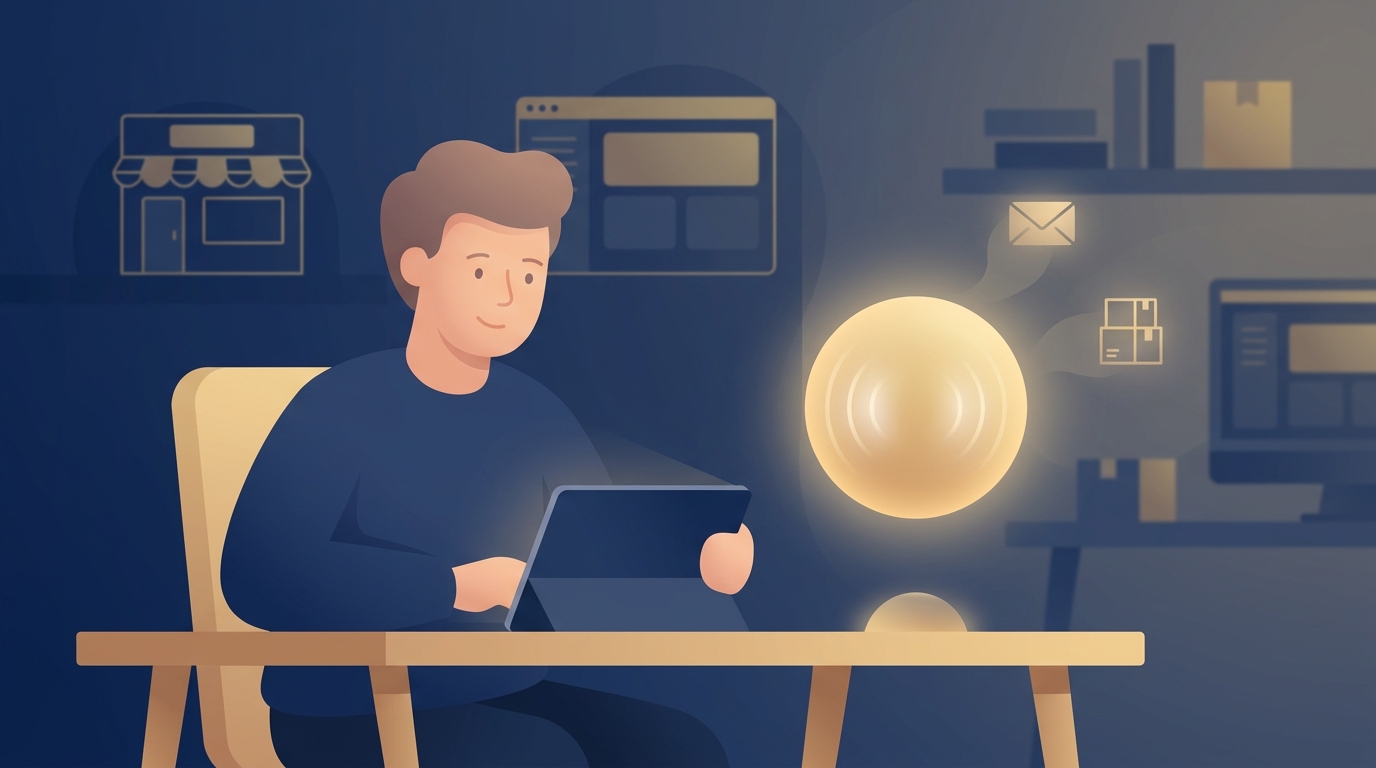
For Years, AI Could Only Read the World. This Year, It's Starting to Walk Around Inside It
Google just let ordinary people walk into a room AI generates as they move through it. It's the same breakthrough behind last week's showroom robots, wearing a different outfit — and it's worth a five-minute habit before it quietly becomes useful.
In this article
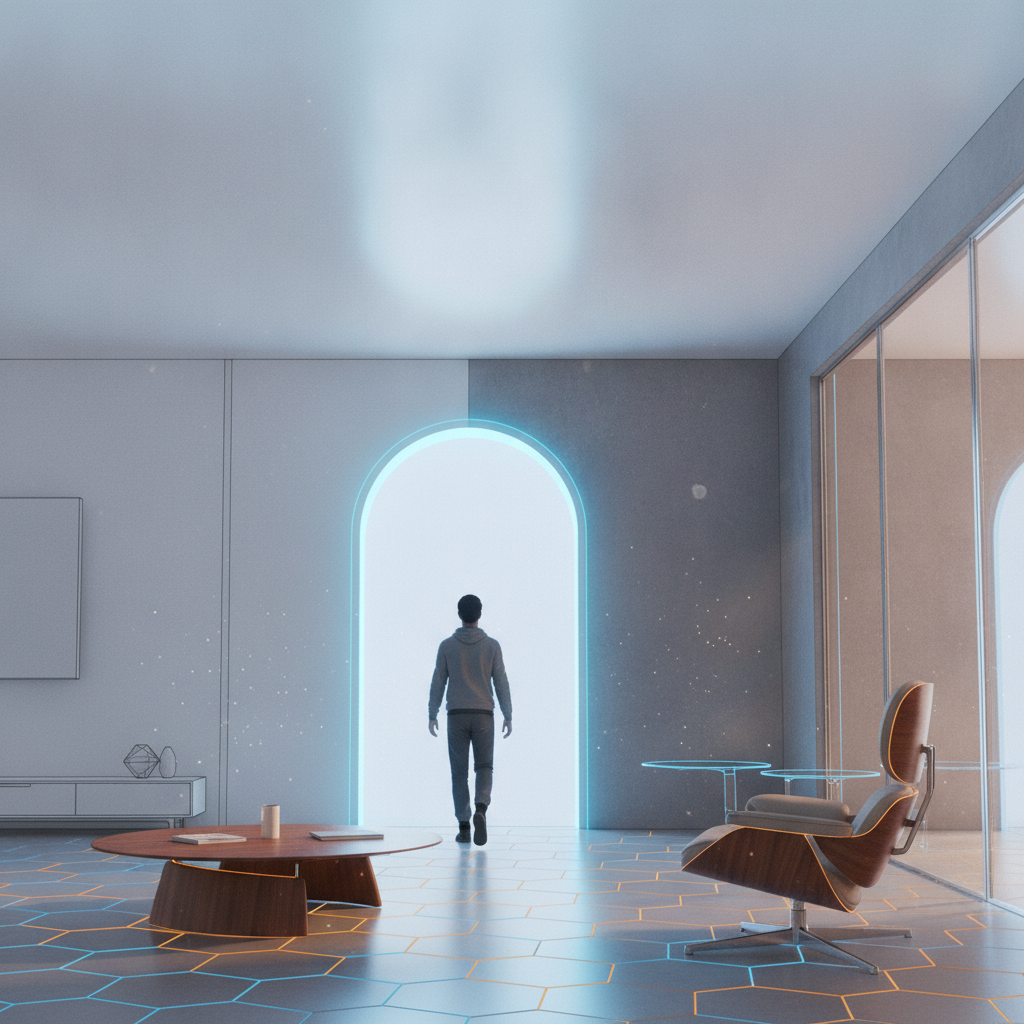
On July 25th, Google quietly flipped a switch most people never noticed. If you paid for their top-tier AI plan in the US, a new option appeared: type a sentence describing a place, and instead of getting a picture of it, you'd get to walk into it. Not a video. Not a 3D model someone built in advance. The world builds itself, one step at a time, as you move — a hallway appears as you turn toward it, a room fills in as you look around, and if you nudge a chair, it stays nudged. They call it Project Genie, and it's the first time something like this has been in ordinary people's hands rather than a research demo.
I want to explain why that's a bigger deal than "cool tech toy," what it actually has in common with the robots I wrote about last week, and the one small habit worth building around it — long before anything like it shows up in a tool you'd actually use for work.
The thing AI still couldn't do
Here's a strange gap that's been sitting in plain sight the whole time everyone's been marveling at chatbots. AI got extremely good at words. Then it got very good at pictures — describe a sunset over Lake Naivasha and it'll paint you one in seconds. But ask it something a five-year-old does without thinking — "if I walk around that table, what will I see on the other side?" — and for years, it genuinely couldn't answer. It had never built an actual sense of space. It had only ever seen flat descriptions and flat images of space, the way you might understand a house purely from someone's photographs, without ever being able to walk into it and check what's actually behind the kitchen door.
What changed is that a new kind of AI, called a "world model," is being trained not just on text or single pictures, but on how places and objects behave when you move through them and touch them — thousands of hours of video showing what's around the next corner, what happens when a ball rolls off a table, how a hallway connects to a room. It's building something closer to the picture you carry in your head of your own house — the one you can walk through with your eyes closed. Fei-Fei Li, one of the most respected researchers in this field, calls this "spatial intelligence," and she's staked her latest company, World Labs, entirely on the bet that it's the next big shift, the same size as the jump from calculators to language models.
The same shift, a different room
If that sounds familiar, it should. It's the same story I told you last week about robots quietly walking out from behind the factory fence — a BYD showroom robot reacting to a stranger walking up to it, unscripted. That robot isn't reacting off a script either. It's drawing on the exact same kind of trained sense of space and movement that lets Project Genie build you a walkable room from a sentence. One version of this technology lives inside a body and learns not to bump into your dog. The other lives on a screen and lets you step into a place that doesn't exist yet. Underneath, it's the same breakthrough, wearing two very different outfits.
That's worth sitting with for a second, because it tells you where this is actually headed. It's not "robots" and "AI worlds" as two separate stories. It's one story — AI finally getting a working sense of physical space — showing up first as a toy you can play with on a screen, and separately, slower and clumsier, as a body that can move through a room. When you see the screen version get good fast, that's a signal about the body version too, and vice versa.
The honest catch
I'd be doing you no favors if I made this sound closer to useful than it is today. What you can generate right now is short, a bit rough at the edges, and it's only reached a small slice of paying users in one country. It's genuinely more "here's a glimpse of a bicycle that's currently missing three wheels" than "here's a product you should be planning around." Architecture firms and game studios are the ones experimenting seriously with it right now, not small businesses, and definitely not yet in a way that's affordable or reliable enough to build a workflow on.
But I want to be equally honest about the other side of that caution: eighteen months ago, "type a sentence and get working code" was also a rough glimpse most people dismissed. The distance between "interesting demo" and "thing my business actually uses" has been closing faster than almost anyone predicted, for almost everything AI has touched so far. I'm not telling you this is ready. I'm telling you it's worth watching closely, because the gap tends to close quicker than it looks like it will from where we're standing today.
A small habit, for this month
Here's the practical version, and it's genuinely small. Most people only ever read about new AI tools — a headline, a screenshot, someone else's opinion of it. This month, pick one new kind of AI tool you've only ever read about, and actually go use it yourself for five minutes, even the free or limited version, even if it's clumsy. Not to become an expert. Just to build your own honest sense of what it actually does well and where it actually breaks, instead of borrowing someone else's excitement or someone else's dismissal.
That's the whole habit. It costs you five minutes and it protects you two ways at once: you won't get talked into overpaying for something that's still a toy, and you won't miss the moment a toy quietly turns into a tool you should have been using six months earlier. If you run a business that touches architecture, interior design, training, or anything where "letting someone walk through a space before it's built" would save you money or mistakes, this particular shift is worth keeping an eye on — not today, but soon.
Where I actually land on this
I don't think anyone reading this needs to generate a walkable 3D room by next week. What I think you need is the habit of noticing, early and calmly, when a piece of AI moves from "answers your questions" to "understands the space around you" — because that's a bigger jump than it sounds like, and it tends to show up in useful tools faster than the skeptics expect and slower than the hype suggests. Somewhere between those two, is usually where the truth actually sits.
Steve Nyanumba
Building software for Kenyan and African businesses at Vapor Technologies.
Building something for your business?
We help Kenyan and African businesses ship software that performs.