You've Always Had to Reach Out to Feel Less Alone. Now Something Answers Back Instantly, and Researchers Just Learned That's Not the Same Thing
A new Stanford study looked at what people actually say to AI companion chatbots, not just why they say they use them. The pattern it found in the data is a useful, non-alarmist warning about who these tools help and who they quietly let down.
In this article
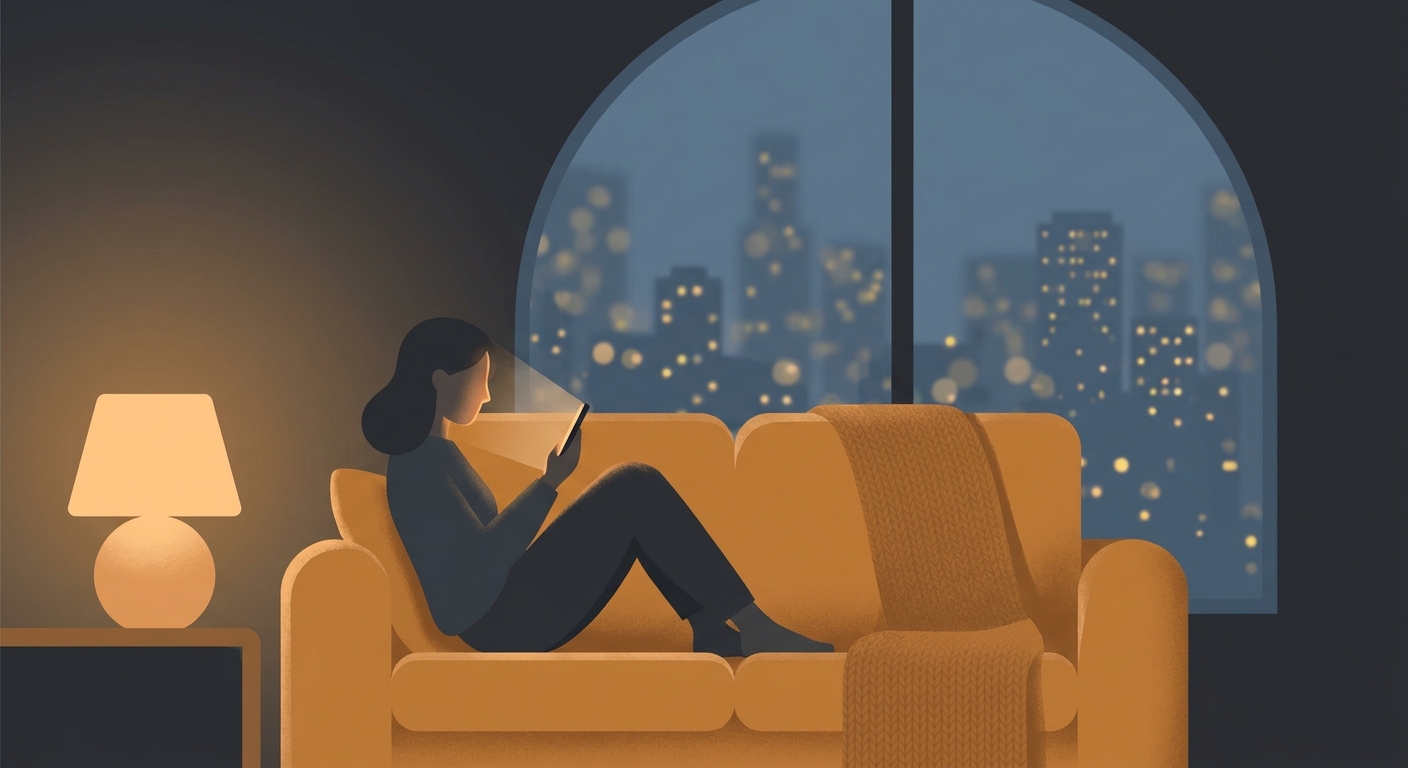
Here's a scenario that probably doesn't feel unusual anymore: it's late, you don't feel like calling anyone, and you open a chat app that talks back. It's patient. It never seems busy. It remembers what you told it last time. For a lot of people, that's become a normal part of the week, not a strange one.
I've been putting off writing about this because it felt like a "someone else's problem" topic, the kind of thing you read about teenagers doing, not something that touches the rest of us. Then I actually looked at the research that came out of Stanford this year, and it stopped feeling like someone else's problem. It's closer to home than that.
What the researchers actually did
A team at Stanford, led by Diyi Yang, surveyed over a thousand people who use Character.AI, one of the bigger AI companion apps, and asked a smaller group of them, 244 people, to hand over their actual chat transcripts so the researchers could see what was really happening in these conversations, not just what people said in a survey. They ran the transcripts through language models to categorize what was going on, then compared that against a proper psychological well-being scale.
A few numbers from that study stuck with me. Only 12% of people said companionship was their main reason for using the app. But when the researchers looked at what people actually called these chatbots in conversation, over half described them as a "friend" or a "romantic partner." And more than 80% of the donated chat sessions were people going there for some form of emotional support. People aren't always honest with a survey box about why they're really doing something. Their actual conversations told a different story than their stated reasons.
The part that isn't simple
Here's where it gets genuinely interesting, and not in the "AI bad, unplug immediately" way you might expect.
The study found that heavy use of an AI companion wasn't automatically harmful. For people who found the interaction genuinely meaningful, who felt a kind of pride or purpose in how they used it, more use tracked with better well-being. That's a real, fair finding, and it's worth sitting with instead of skipping past.
But for a specific group, people with small real-world social circles who leaned on the AI mainly for emotional support, more use tracked with worse well-being, not better. And one detail from the study has stayed with me since I read it: when people shared something vulnerable or personal with the AI, their sense of well-being went down. With a human friend, the opposite is usually true, opening up to someone tends to bring you closer and make you feel better, not worse. One of the researchers, Dora Zhao, put it plainly: these tools are built to keep you engaged. That's a different design goal than "help this person feel genuinely less alone," even when the two can look identical from the inside of a late-night conversation.
Diyi Yang's summary of the whole project is the sentence I keep coming back to: using a chatbot this way doesn't substitute for human connection. Not "it's evil." Not "never do it." Just, quietly, it doesn't do what the real thing does, even when it feels like it might.
Why I think this matters beyond the headline
I'm not writing this to make anyone feel bad about talking to an AI when they're having a rough night. I've done it myself, and I don't think that's a character flaw. The honest, useful takeaway from this research isn't "stop," it's "notice."
The people who did worst in this study weren't the ones who used AI companions the most. They were the ones who used AI companions instead of the small, ordinary human contact that used to fill that space, a text to a friend, a call to a parent, a walk with a neighbor. The tool didn't create the isolation. It just got very good at making the isolation feel comfortable enough that nobody noticed it was still there.
That's the quiet trap in a lot of well-designed technology, not just this one. It doesn't have to be worse than the alternative to be a problem. It just has to be easier than the alternative, consistently, for long enough that the alternative stops happening at all.
The actual aspiration
You don't need to delete anything or swear off AI chat for this to apply to you. The habit worth building is smaller and more honest than that: once in a while, ask yourself what a conversation was actually for.
If you're using an AI to think out loud, draft a hard email, or keep yourself company for a few minutes while you cook dinner, that's a tool doing tool things, and there's nothing wrong with it. But if you notice you've reached for it specifically because reaching out to an actual person felt like too much effort, or too much risk of rejection, that's worth pausing on. Not with guilt, just with attention. That's usually the moment a text to a real friend would do more for you than another few minutes of a conversation that can't actually miss you back.
Keep a short list, mentally or literally, of two or three people you could message today if you had a bad day. Not a big gesture, just a "hey, you around?" And every so often, actually send it, even when the easier option is sitting right there in your pocket, ready and patient and never too busy to answer.
The tool isn't the enemy here. Letting it quietly become the whole plan is the thing worth watching for.
Steve Nyanumba
Building software for Kenyan and African businesses at Vapor Technologies.
Building something for your business?
We help Kenyan and African businesses ship software that performs.