Everything Online Is Starting to Look AI-Made. The Rare Thing Now Is Being Unmistakably Real
The internet is filling up with AI-made everything, and polish no longer proves anything. The rare, valuable thing now is being provably real and genuinely trusted. Here's the small daily habit that builds it.

In this article
Something strange is happening to the internet this year, and once you notice it, you can't unsee it.
Scroll through almost any feed now and a quiet question starts to nag at you: was this written by a person, or by a machine? The perfectly polished caption. The article that says a lot and somehow nothing. The photo that's a little too flawless. The review that reads like it was printed from a template. More and more of what we see is being produced by AI, and it's getting harder to tell the difference at a glance.
I don't say that to scare anyone. The tools are genuinely useful, and I use them every day. But there's a side effect nobody quite prepared us for. When everything can be produced instantly and cheaply, the flood of "fine, polished, forgettable" becomes overwhelming — and something older and simpler suddenly stands out again. Being unmistakably, provably real. A person people know, and a person people trust.
When everything looks perfect, perfect stops meaning anything
Think about what used to signal quality. A clean design, good grammar, a professional-looking photo, a confident tone. For a long time, those things were hard to fake, so they told you something. If a message was well put together, a real effort probably went into it.
That signal is breaking. Anyone can now generate a slick post, a glossy image, or a flawless-sounding pitch in seconds. So "polished" no longer tells you much. It might mean someone cared. It might mean they clicked a button. You genuinely can't tell anymore.
And here's the interesting part. When the polish stops meaning anything, people start looking for a different signal underneath it. They start asking a more human question: do I actually trust the person behind this? Have they shown up before? Did they do what they said last time? That question can't be faked by a machine, because it isn't about the words on the screen. It's about a track record only a real person can build.
The thing AI can't copy is you keeping your word
I keep coming back to one simple idea. A machine can copy your writing style, your logo, even your voice. What it can't copy is the trust you've earned by being reliable over time.
If a customer has bought from you three times and you delivered every time, that's real, and no amount of AI content can manufacture it. If you say you'll call on Tuesday and you call on Tuesday, that lands harder now than the fanciest brochure. If you show up as the same steady, honest person whether or not anyone's watching, people feel it — and in a world drowning in slick strangers, they move toward the person they can count on.
This is quietly good news, especially for people who never felt "techy" enough to compete. The advantage is shifting away from who can produce the most content and toward who can be genuinely trusted. That's not a skill you download. It's a reputation you build, one kept promise at a time.
Real doesn't mean perfect. It usually means a little rough.
Here's a twist worth sitting with. As everything gets more polished, the things that feel human are often the slightly imperfect ones.
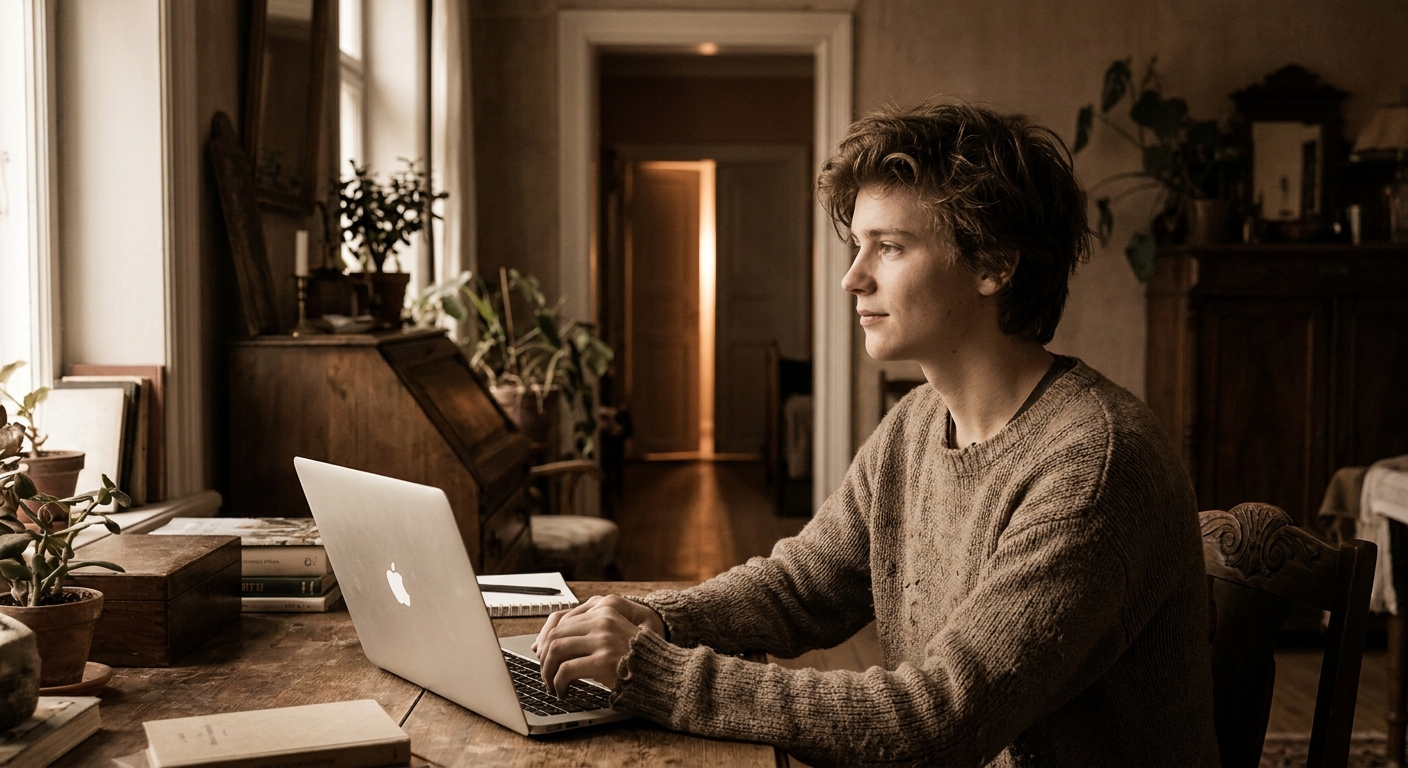
The honest note you wrote yourself, with a small typo and a real opinion in it, now stands out more than a spotless AI paragraph. The plain phone photo of your actual work beats the too-perfect stock image. The voice note where you sound like you, pauses and all, feels more trustworthy than a flawless script. People are starting to read a bit of roughness as proof that a human was actually there.
So the goal isn't to compete with the machines at being polished. You'll lose that race, and it's not worth winning. The goal is to lean into the one thing they can't do: be a specific, real, accountable person, in the open, again and again.
What this looks like as a regular habit
Like anything worth doing, this only matters if you turn it into something you actually repeat. Let me make it small and concrete.
Once a day, do one thing that's unmistakably, provably you. Not a polished thing. A real one. Send the customer a short voice note instead of a perfect typed message. Share a plain photo of the work you did today, exactly as it looks. Reply to someone yourself, in your own words, even if it's a little clumsy. Keep one small promise you made and let it be seen.
And build the deeper habit underneath it: do what you say you'll do, in the small things, when it would be easy not to. Show up on the day you said. Send the thing you promised. Own the mistake instead of hiding it. None of these feel dramatic on any single day. But stack them up over months and you become the rare thing — a person whose word is good — and that reputation quietly does more selling for you than any content ever could.
Why this matters more here than anywhere
Let me be honest about why this one is close to my heart. Where I work, business has always run on trust and relationships. People buy from the person they know, the one who showed up last time, the one their cousin vouched for. That's not a weakness in how we do things — it's turning out to be exactly the advantage this moment rewards.
For a while it felt like technology might reward only the people who could produce the most, the fastest. But the flood has arrived, and it's already too much. What people are hungry for now isn't more content. It's someone real they can trust in a sea of things that might not be. A lot of people around me have been building that their whole lives without calling it a strategy. They just called it being decent and keeping their word.
So if you're wondering what to sharpen this year to get to the next level, it isn't learning to sound more like a machine. Everyone will have the machines. The rare edge is going the other way — being more clearly, reliably, provably human. Keep your promises where people can see it. Show your real face and your real work. Be the same person whether the camera's on or off.
The internet is filling up with things that look perfect and mean nothing. Be the opposite. Be a little rough, completely real, and genuinely trusted. Do one real thing today, keep one small promise, and do it again tomorrow. A year from now, while everyone else is lost in the flood, you'll be the person people actually reach for.
Steve Nyanumba
Building software for Kenyan and African businesses at Vapor Technologies.
Building something for your business?
We help Kenyan and African businesses ship software that performs.